Showing posts with label Russia. Show all posts

Donald Trump prepares supporters for worst as Robert Mueller's Russia investigation closes in

Embattled President tells fanbase election hacking conspiracy an establishment fabrication invented to deprive them of their leader of choice


President Donald Trump is again attacking the media on Monday, and his broadsides carry a newly ominous edge: He is both faulting the media for allegedly downplaying the size and intensity of support from his base and accusing them of trying to deliberately weaken that support for him.

7 Aug
Donald J. Trump  ✔ @realDonaldTrump
The Trump base is far bigger & stronger than ever before (despite some phony Fake News polling). Look at rallies in Penn, Iowa, Ohio.......

Donald J. Trump ✔ @realDonaldTrump
Hard to believe that with 24/7 #Fake News on CNN, ABC, NBC, CBS, NYTIMES & WAPO, the Trump base is getting stronger!
7:18 AM - Aug 7, 2017
 25,742 25,742 Replies   16,584 16,584 Retweets   69,173 69,173 likes

This comes some 24 hours after Deputy Attorney General Rod J. Rosenstein made big news by telling Fox News Sunday that if the special counsel finds evidence of crimes in the course of his probe into Russian sabotage of our election, it may be within the scope of his investigation to pursue them.

In these seemingly disparate developments, it is hard not to discern the potential for a volatile, combustible combination.

Because Trump is undermining our democratic norms and processes in so many ways, it is often easy to focus on each of them in isolation, rather than as part of the same larger story. But, taken together, they point to a possible climax in which Trump, cornered by revelations unearthed by Robert S. Mueller III's probe and by ongoing media scrutiny, seeks to rally his supporters behind the idea that this outcome represents not the imposition of accountability by functioning civic institutions, but rather an effort to steal the election from him - and from them.

On ABC's This Week, Trump counsellor Kellyanne Conway on Sunday dismissed the “entire Russia investigation” as a “total fabrication” to “excuse” Hillary Clinton's loss. This echoed Trump himself, who recently told a rally that the probe is an effort to “cheat” his supporters out of their legitimately elected leadership (i.e., him) with a “fake story” that is “demeaning to our country and demeaning to our Constitution.”

It bears repeating that Mueller's investigation is looking at how a hostile foreign power may have sabotaged our democracy, and at whether the Trump campaign colluded with it, and at conduct by Trump himself that came after the election: Whether the firing of former FBI Director James Comey after a demand for his loyalty was part of a pattern of obstruction of justice. The first of these has been attested to by our intelligence services, and evidence of the second (at least in the form of a willingness to collude) and the third of these has been unearthed by dogged scrutiny by news outlets. It is hardly an accident that Trump continues to cast doubt on the credibility of both those institutions, even as he and his spokespeople continue to cast the entire affair as an effort to reverse the election by illegitimate means.

This threatens damage on multiple levels. By casting the entire Russia story as fiction, Trump seeks to undermine the credibility of efforts to determine how our electoral system might be vulnerable to further attacks, separate and irrespective of what is learned about the Trump campaign's conduct, possibly making it less likely that we secure our system against any such future sabotage.

We don't know what all the ongoing scrutiny will produce in the way of revelations. But if it does produce any serious wrongdoing by Trump and/or his campaign - or even evidence of serious misconduct that is not criminal - it's not difficult to imagine what might happen next. Trump's advisers regularly tell us he will cooperate with Mueller's probe and play down the possibility of any effort to remove the special counsel. But Trump has confirmed that he is furious with his own attorney general, Jeff Sessions, for failing to protect him from Mueller's probe. That Trump confirmed this publicly only further underscores that he has zero sense of any obligation to the public to follow any rules of conduct, and plainly views any efforts to hold him accountable to those rules as illegitimate.

Conservative writer Matt Lewis floats a scenario in which Mueller, under pressure to produce results, slips into prosecutorial overreach, giving Trump voters legitimate reasons to feel that the presidency is being stolen from them. It is fair to worry about such an outcome, and we must remember that we are far from knowing the full truth about what happened in 2016. But it's also easy to envision the flip side: Trump demagoguing his supporters into a frenzy of rage, at rallies that are exactly like the ones we've seen in recent days, in the face of legitimate revelations.

To be sure, there are new signs that Republicans in Congress are taking steps to set up safeguards, should Trump try to remove Mueller. There is reassuring evidence that our institutions are holding - for now, anyway - and as Brian Beutler notes in The New Republic, it's likely that more future revelations about Trump's unfitness for the presidency will further undercut his efforts to cast institutions holding him accountable as illegitimate. But Trump is already giving every indication that he will go all out in trying. And how much damage that will cause is anyone's guess.

Read More >>

Secret CIA assessment says Russia was trying to help Trump win White House


The CIA has concluded in a secret assessment that Russia intervened in the 2016 election to help Donald Trump win the presidency, rather than just to undermine confidence in the U.S. electoral system, according to officials briefed on the matter.

Intelligence agencies have identified individuals with connections to the Russian government who provided WikiLeaks with thousands of hacked emails from the Democratic National Committee and others, including Hillary Clinton’s campaign chairman, according to U.S. officials. Those officials described the individuals as actors known to the intelligence community and part of a wider Russian operation to boost Trump and hurt Clinton’s chances.

“It is the assessment of the intelligence community that Russia’s goal here was to favor one candidate over the other, to help Trump get elected,” said a senior U.S. official briefed on an intelligence presentation made to U.S. senators. “That’s the consensus view.”

The Obama administration has been debating for months how to respond to the alleged Russian intrusions, with White House officials concerned about escalating tensions with Moscow and being accused of trying to boost Clinton’s campaign.

In September, during a secret briefing for congressional leaders, Senate Majority Leader Mitch McConnell (R-Ky.) voiced doubts about the veracity of the intelligence, according to officials present.

The Trump transition team dismissed the findings in a short statement issued Friday evening. “These are the same people that said Saddam Hussein had weapons of mass destruction. The election ended a long time ago in one of the biggest Electoral College victories in history. It’s now time to move on and ‘Make America Great Again,’ ” the statement read.

Trump has consistently dismissed the intelligence community’s findings about Russian hacking.

“I don’t believe they interfered” in the election, he told Time magazine this week. The hacking, he said, “could be Russia. And it could be China. And it could be some guy in his home in New Jersey.”

The CIA shared its latest assessment with key senators in a closed-door briefing on Capitol Hill last week, in which agency officials cited a growing body of intelligence from multiple sources. Agency briefers told the senators it was now “quite clear” that electing Trump was Russia’s goal, according to the officials, who spoke on the condition of anonymity to discuss intelligence matters.

The CIA presentation to senators about Russia’s intentions fell short of a formal U.S. assessment produced by all 17 intelligence agencies. A senior U.S. official said there were minor disagreements among intelligence officials about the agency’s assessment, in part because some questions remain unanswered.

For example, intelligence agencies do not have specific intelligence showing officials in the Kremlin “directing” the identified individuals to pass the Democratic emails to WikiLeaks, a second senior U.S. official said. Those actors, according to the official, were “one step” removed from the Russian government, rather than government employees. Moscow has in the past used middlemen to participate in sensitive intelligence operations so it has plausible deniability.

Julian Assange, the founder of WikiLeaks, has said in a television interview that the “Russian government is not the source.”

The White House and CIA officials declined to comment.

On Friday, the White House said President Obama had ordered a “full review” of Russian hacking during the election campaign, as pressure from Congress has grown for greater public understanding of exactly what Moscow did to influence the electoral process.

“We may have crossed into a new threshold, and it is incumbent upon us to take stock of that, to review, to conduct some after-action, to understand what has happened and to impart some lessons learned,” Obama’s counterterrorism and homeland security adviser, Lisa Monaco, told reporters at a breakfast hosted by the Christian Science Monitor.

Obama wants the report before he leaves office Jan. 20, Monaco said. The review will be led by James Clapper, the outgoing director of national intelligence, officials said.

During her remarks, Monaco didn’t address the latest CIA assessment, which hasn’t been previously disclosed.

Seven Democratic senators last week asked Obama to declassify details about the intrusions and why officials believe that the Kremlin was behind the operation. Officials said Friday that the senators specifically were asking the White House to release portions of the CIA’s presentation.

This week, top Democratic lawmakers in the House also sent a letter to Obama, asking for briefings on Russian interference in the election.

U.S. intelligence agencies have been cautious for months in characterizing Russia’s motivations, reflecting the United States’ long-standing struggle to collect reliable intelligence on President Vladi­mir Putin and those closest to him.

In previous assessments, the CIA and other intelligence agencies told the White House and congressional leaders that they believed Moscow’s aim was to undermine confidence in the U.S. electoral system. The assessments stopped short of saying the goal was to help elect Trump.

On Oct. 7, the intelligence community officially accused Moscow of seeking to interfere in the election through the hacking of “political organizations.” Though the statement never specified which party, it was clear that officials were referring to cyber-intrusions into the computers of the DNC and other Democratic groups and individuals.

Some key Republican lawmakers have continued to question the quality of evidence supporting Russian involvement.

“I’ll be the first one to come out and point at Russia if there’s clear evidence, but there is no clear evidence — even now,” said Rep. Devin Nunes (R-Calif.), the chairman of the House Intelligence Committee and a member of the Trump transition team. “There’s a lot of innuendo, lots of circumstantial evidence, that’s it.”

[U.S. investigating potential covert Russian plan to disrupt elections]

Though Russia has long conducted cyberspying on U.S. agencies, companies and organizations, this presidential campaign marks the first time Moscow has attempted through cyber-means to interfere in, if not actively influence, the outcome of an election, the officials said.

The reluctance of the Obama White House to respond to the alleged Russian intrusions before Election Day upset Democrats on the Hill as well as members of the Clinton campaign.

Within the administration, top officials from different agencies sparred over whether and how to respond. White House officials were concerned that covert retaliatory measures might risk an escalation in which Russia, with sophisticated cyber-capabilities, might have less to lose than the United States, with its vast and vulnerable digital infrastructure.

The White House’s reluctance to take that risk left Washington weighing more-limited measures, including the “naming and shaming” approach of publicly blaming Moscow.

By mid-September, White House officials had decided it was time to take that step, but they worried that doing so unilaterally and without bipartisan congressional backing just weeks before the election would make Obama vulnerable to charges that he was using intelligence for political purposes.

Instead, officials devised a plan to seek bipartisan support from top lawmakers and set up a secret meeting with the Gang of 12 — a group that includes House and Senate leaders, as well as the chairmen and ranking members of both chambers’ committees on intelligence and homeland security.

Obama dispatched Monaco, FBI Director James B. Comey and Homeland Security Secretary Jeh Johnson to make the pitch for a “show of solidarity and bipartisan unity” against Russian interference in the election, according to a senior administration official.

Specifically, the White House wanted congressional leaders to sign off on a bipartisan statement urging state and local officials to take federal help in protecting their voting-registration and balloting machines from Russian cyber-intrusions.

Though U.S. intelligence agencies were skeptical that hackers would be able to manipulate the election results in a systematic way, the White House feared that Russia would attempt to do so, sowing doubt about the fundamental mechanisms of democracy and potentially forcing a more dangerous confrontation between Washington and Moscow.

[Putin denies that Russia hacked the DNC but says it was for the public good]

In a secure room in the Capitol used for briefings involving classified information, administration officials broadly laid out the evidence U.S. spy agencies had collected, showing Russia’s role in cyber-intrusions in at least two states and in hacking the emails of the Democratic organizations and individuals.

And they made a case for a united, bipartisan front in response to what one official described as “the threat posed by unprecedented meddling by a foreign power in our election process.”

The Democratic leaders in the room unanimously agreed on the need to take the threat seriously. Republicans, however, were divided, with at least two GOP lawmakers reluctant to accede to the White House requests.

According to several officials, McConnell raised doubts about the underlying intelligence and made clear to the administration that he would consider any effort by the White House to challenge the Russians publicly an act of partisan politics.

Some of the Republicans in the briefing also seemed opposed to the idea of going public with such explosive allegations in the final stages of an election, a move that they argued would only rattle public confidence and play into Moscow’s hands.

McConnell’s office did not respond to a request for comment. After the election, Trump chose McConnell’s wife, Elaine Chao, as his nominee for transportation secretary.

Some Clinton supporters saw the White House’s reluctance to act without bipartisan support as further evidence of an excessive caution in facing adversaries.

“The lack of an administration response on the Russian hacking cannot be attributed to Congress,” said Rep. Adam B. Schiff (Calif.), the ranking Democrat on the House Intelligence Committee, who was at the September meeting. “The administration has all the tools it needs to respond. They have the ability to impose sanctions. They have the ability to take clandestine means. The administration has decided not to utilize them in a way that would deter the Russians, and I think that’s a problem.”

Read More >>

Russia no longer denies hacking DNC


WASHINGTON — The Federal Bureau of Investigation suspects Russian intelligence agencies are behind the recent hacking of the emails of Hillary Clinton’s campaign chairman and of a contractor handling Florida voter data, according to people briefed on the investigations.

Top Russian officials on Wednesday, meanwhile, shifted away from denying a role in a separate hack of the Democratic National Committee. President Vladimir Putin said it is irrelevant who stole the computer records, and the foreign minister said that the U.S. hasn’t proven anything so far.

The comments, made in separate public appearances, reflect an ambivalence among top Russian officials about accusations made Friday by U.S. intelligence agencies that Moscow directed a hack-and-leak campaign aimed at interfering in the U.S. election.

“Everyone is saying, ‘Who did it?’” Putin said Wednesday at an investor forum in Moscow. “But does it matter that much? It’s what’s inside the information that matters.”

Russian Foreign Minister Sergei Lavrov on Wednesday, in an interview on CNN, didn’t deny involvement in the recent hacking operation. “We did not deny this,” he said, but added, “They did not prove it.”

Read More >>

U.S. government officially accuses Russia of hacking campaign to interfere with elections


The Obama administration on Friday officially accused Russia of attempting to interfere in the 2016 elections, including by hacking the computers of the Democratic National Committee and other political organizations.

The denunciation, made by the Office of the Director of National Intelligence and the Department of Homeland Security, came as pressure was growing from within the administration and some lawmakers to publicly name Moscow and hold it accountable for actions apparently aimed at sowing discord around the election.

“The U.S. Intelligence Community is confident that the Russian Government directed the recent compromises of e-mails from U.S. persons and institutions, including from U.S. political organizations,” said a joint statement from the two agencies. “. . . These thefts and disclosures are intended to interfere with the U.S. election process.”

The public finger-pointing was welcomed by senior Democratic and Republican lawmakers, who also said they now expect the administration to move to punish the Kremlin as part of an effort to deter further acts by its hackers.

“Today was just the first step,” said Sen. Ben Sasse (R-Neb.), a member of the Homeland Security Committee. “Russia must face serious consequences. Moscow orchestrated these hacks because [Russian President Vladimir] Putin believes Soviet-style aggression is worth it. The United States must upend Putin’s calculus with a strong diplomatic, political, ­cyber and economic response.”

The White House has been mulling potential responses, such as economic sanctions, but no formal recommendation to the president has been made.

The DNC publicly disclosed the intrusions in June, saying its investigation determined that Russian government hackers were behind the breach. That was followed shortly after by a major leak of DNC emails, some so embarrassing that they forced the resignation of the DNC chairwoman, Rep. Debbie Wasserman Schultz (Fla.), on the eve of the Democratic National Convention.

The administration also blamed Moscow for the hack of the Democratic Congressional Campaign Committee and the subsequent leak of private email addresses and cellphone numbers of Democratic lawmakers.

Other leaks of hacked material followed.

The digitally purloined material has appeared on websites such as DC Leaks and WikiLeaks. It has included the private emails of former secretary of state Colin Powell and aides to former secretary of state and Democratic presidential nominee Hillary Clinton.

An online persona calling himself Guccifer 2.0 has claimed responsibility for posting the material. Those sites and that persona are “consistent with the methods and motivations of Russian-directed efforts,” the joint statement said. “. . . We believe, based on the scope and sensitivity of these efforts, that only Russia’s senior-most officials could have authorized these activities.”

The Kremlin on Friday dismissed the administration’s accusation.

“This is some sort of nonsense,” said Dmitry Peskov, press secretary for Putin. “Every day, Putin’s site gets attacked by tens of thousands of hackers. Many of these attacks can be traced to U.S. territory. It’s not as though we accuse the White House or Langley of doing it each time it happens.”

Hours after the administration called out Russia, WikiLeaks released some 2,000 emails apparently hacked from the personal Gmail inbox of Clinton’s campaign chairman, John Podesta. They included excerpts of speeches Clinton made to Wall Street banks that she had resisted making public. In one of them, she said that Wall Street knew best how it should be regulated. The campaign has not acknowledged the excerpts’ authenticity. There was no immediate word from the FBI as to whether the Russians were behind this release.

The Obama administration noted that attempts to interfere in other countries’ political processes are not new to Moscow. Russian hackers have used hacking and other techniques to influence public opinion in Europe and Eurasia, it noted. On the eve of a critical post-revolution presidential vote in Ukraine in 2014, for instance, a digital assault nearly crippled the website of the country’s central election commission.

The intelligence community has for weeks been confident that hackers tied to Russian spy agencies were behind the DNC hack. Senior officials at the Justice Department and DHS pressed the White House to go public with an accusation.

But a number of administration officials were worried that such a statement would appear to politicize the issue in the weeks before the election. They were also concerned about the Kremlin’s reaction and about inadvertently disclosing sensitive intelligence sources and methods.

“Is it in our interest to act?” Lisa O. Monaco, Obama’s adviser on counterterrorism and homeland security, said at a Washington Post cybersecurity summit Thursday. “The primary guiding and overarching focus in these discussions is: What is in the national security interest of the United States? That’s the North Star for those discussions.”

Senior administration officials in recent weeks had begun to hint that a public attribution might be coming.

“We know Russia is a bad actor in cyberspace, just as China has been, just as Iran has been,” ­Monaco said at a cybersecurity conference at the Center for Strategic and International Studies last month. “Nobody should think that there is a free pass when you’re conducting malicious cyber-activity.”

Assistant Attorney General John Carlin said at the same event that the message to countries, such as Russia, that attempt to meddle in the U.S. election is, “You can and will be held accountable.”

With the public naming of Moscow, the administration has now officially called out all its major nation-state foes in cyberspace: China, Iran, North Korea and Russia. But among the four, Russia is the only government that has not been subject to a deterrent measure.

The administration has a range of options, including economic sanctions for malicious cyber-activity, a new tool created by the president that has yet to be used. The Justice Department could bring indictments for hacking. The National Security Agency could take a covert action in cyberspace to send a signal to the Kremlin. Or the State Department can decide to eject Russian diplomats.

Jason Healey, a senior research scholar on cyber-issues at Columbia University, said the Pentagon’s Cyber Command should disrupt Russian hacking operations. “Go after their command and control,” he said. “ ‘Counteroffensive’ is the key word here.”

Rep. Adam B. Schiff of California, the ranking Democrat on the House Intelligence Committee, urged the administration to work with European allies to develop a “concerted” response, whether it involves economic sanctions or other measures.

“The best way to push back,” Schiff said, “is in a truly international effort to let the Russians know there will be costs to this latest form of cyber-aggression against others.”

David Filipov contributed to this report.

Read More >>

FBI Suspects Russia Hacked DNC; U.S. Officials Say It Was to Elect Donald Trump

Did the Russian government hack the DNC to bring down Hillary Clinton? That’s the view that’s quickly emerging inside American intelligence and law enforcement agencies.

The FBI suspects that Russian government hackers breached the networks of the Democratic National Committee and stole emails that were posted to the anti-secrecy site WikiLeaks on Friday. It’s an operation that several U.S. officials now suspect was a deliberate attempt to influence the presidential election in favor of Donald Trump, according to five individuals familiar with the investigation of the breach.

The theory that Moscow orchestrated the leaks to help Trump, who has repeatedly praised Russian President Vladimir Putin and practically called for the end of NATO, is fast gaining currency within the Obama administration because of the timing of the leaks and Trump’s own connections to the Russian government, the sources said on condition of anonymity because the investigation is ongoing and developing quickly.

About 20,000 internal DNC emails were disclosed just days before the beginning of the Democratic National Convention in Philadelphia and several showed an effort by staffers to undermine Bernie Sanders’s campaign against Hillary Clinton. One email even discussed challenging Sanders’s religious faith. In response to the embarrassing revelations, DNC Chairwoman Debbie Wasserman Schultz announced she would step down after the convention.

Current and former U.S. officials drew analogies to so-called “active measures campaigns,” or state-sponsored operations designed for political effects.

“The release of emails just as the Democratic National Convention is getting underway this week has the hallmarks of a Russian active measures campaign,” David Shedd, a former director of the Defense Intelligence Agency, told The Daily Beast. Shedd said that additional leaks were likely, echoing an opinion expressed by U.S. officials and experts who said that the release of emails on Friday may just be an opening salvo.

Officials also noted Trump’s own connections to the Russian government. Putin has publicly praised the nominee, who said he was “honored” by the compliment. Trump’s campaign manager, Paul Manafort, was a consultant for Viktor Yanukovych, the former president of Ukraine who was ousted for his pro-Moscow orientation (and now lives in Russia). One of Trump’s top national security advisers, retired Army Gen. Michael Flynn, sat with Putin at a dinner celebrating the 10th anniversary of Kremlin-backed media network RT and was paid to give a speech at the event; Flynn later retweeted an anti-Semitic message that called into question any Kremlin-Trump link. Another Trump adviser, Carter Page, recently denounced America’s “often-hypocritical focus on democratization” while in Moscow. And last week, Trump said that he might not come to the aid of U.S. NATO allies in the face of Russian aggression unless they paid what he thinks they owe for Europe’s common defense.

Officials also thought it was telling that the emails were given to WikiLeaks, which is perceived as being hostile to the U.S. government. “This wasn’t surprising to us,” said one U.S. official familiar with the investigation.

An FBI spokesperson said in a statement Monday that the bureau was investigating the breach but declined to comment on whether political motivation was part of the inquiry. “A compromise of this nature is something we take very seriously, and the FBI will continue to investigate and hold accountable those who pose a threat in cyberspace,” the spokesperson said.

“I’m sure they will consider potential motives,” White House Spokesperson Josh Earnest told reporters on Monday.


Two U.S. officials told The Daily Beast that while hacking is a crime, and therefore falls under the FBI’s jurisdiction, trying to manipulate an election is not. That may limit what the FBI can investigate, the officials said said.

“Manipulation is not a crime. Some would argue that Voice of America or Fox News try to manipulate elections,” one retired FBI agent told The Daily Beast.

That doesn’t mean the FBI has to remain silent if it finds evidence of Russia’s meddling. Should the bureau release a statement after an investigation tying the Russians to the hack and subsequent release to Wikileaks, that would essentially be a public indictment, the officials said.

It also may be possible for the FBI to investigate the question of intent, including whether the email leak is an instance of an unregistered foreign agent illegally trying to influence the U.S. political system, another U.S. official said. But it’s easier for the FBI to investigate the breach and theft of information itself, which are clearly prohibited under U.S. law, the official added.

The FBI first notified the DNC in April that it had been breached, said two individuals who are familiar with the matter. U.S. law enforcement and intelligence officials had been aware of two Russian hacker groups that have been linked to the intrusion and are also believed to have compromised networks in U.S. government agencies, including the Defense Department, the State Department, and the White House, as well as U.S. companies and universities.

The DNC hired a computer security firm, CrowdStrike, to investigate the breach. It has publicly attributed the operation to two known hacker groups connected to the Russian government that it dubs Cozy Bear and Fancy Bear.

The two groups, which compete with one another, got into the DNC networks last summer and this April, respectively, CrowdStrike told The Washington Post, which first reported the breaches last month.

Another cybersecurity firm, ThreatConnect, independently assessed the breach and concluded that the DNC operation was consistent with the hackers’ previous efforts to gather information on U.S. officials and operations.

The theft of information, which at the time reportedly consisted of opposition research and the DNC’s files on Trump, seemed to be part of a longer campaign of spying by the Russians in order to glean insights into the next president. Director of National Intelligence James Clapper also said in May that there were indications both presidential campaigns had been targeted by foreign hackers.

But the provision of the DNC emails to WikiLeaks added a new dimension to the intrusion. (The group has pushed back against the idea that Russia supplied the emails.)

“If there is a concerted effort to undermine the campaign of the Democratic Party nominee, we can and should expect additional embarrassing emails to be released by Wikileaks, including from candidate Hillary Clinton’s personal server,” Shedd, the former Defense Intelligence Agency chief, said.

The top Democrat on the House Intelligence Committee said lawmakers had been briefed on the intrusion and “will continue to seek further information from the [intelligence community] as to the origin of any attack and a potential connection to Russia or another state sponsor.”

"If the hack is linked to Russian actors, it would not be the first time cyber intrusions linked to the Kremlin and its supporters have sought to influence the political process in other countries,” Rep. Adam Schiff said in a statement. “Given Donald Trump’s well known admiration for Putin and his belittling of NATO, the Russians have both the means and the motive to engage in a hack of the DNC and the dump of its emails prior to the Democratic Convention. That foreign actors may be trying to influence our election—let alone a powerful adversary like Russia—should concern all Americans of any party."

Within the email dump itself, there were further indications of foreign meddling in the campaign.


On May 4, DNC opposition researcher Alexandra Chalupa told a colleague that ever since she began collecting information on Trump campaign director Paul Manafort, she had been receiving daily security warnings from Yahoo that her personal account may have “been the target of state-sponsored actors.” Such notifications are routine when an internet or email provider suspects that a user may have been hacked or is likely to be hacked.

Chalupa told DNC communications director Luis Miranda in an email that she continued to get the warnings from Yahoo “despite changing my password often.”

A few days prior to that message, a DNC staffer notified colleagues that the committee’s rapid-response blog, Factivists, had been “compromised.”

“We have been compromised! But it's all ok,” Rachel Palermo said in a brief message to an unspecified number of recipients. Palermo said that to “prevent future issues,” the password to the blog would be changed “every few weeks. She also included a new password in the email, which the intruders may well have seen.

And in mid-May, two DNC staffers communicating about a donor said that her email account had been hacked and was no longer working. The donor was identified only as Agnes. Agnes Gund is a prominent philanthropist and Democratic donor. DNC officials told The Washington Post that their donor files weren’t accessed. It’s not clear if the donor’s email was hacked by the same Russian groups.

Attributing the source of a breach to a specific actor is difficult, but CrowdStrike, which has close ties to the FBI and U.S. intelligence community, provided some details on its findings in a recent blog post. The company based its attributions on characteristic tools and techniques that that it has attributed to the hacker group in previous intrusions.

Cozy Bear prefers “a broadly targeted spearphish campaign,” or using emails that appear to come from a trusted sender but that actually include web links that will insert malicious software code onto a victim’s machine, CrowdStrike reported. The code uses sophisticated tools to remotely access the computer, as well as encryption to cover their tracks, both of which indicate “a well-resourced adversary.”

Fancy Bear likewise has developed a suite of hacking tools and techniques and has been linked to intrusions on U.S. government systems, CrowdStrike said. The group tends to favor establishing websites “that spoof the look and feel of the victim’s web-based email services in order to steal their credentials.”

It’s not clear precisely how the groups penetrated the DNC’s networks. But CrowdStrike said its analysts “immediately” recognized the hackers’ signatures. Separately, another computer security firm, ThreatConnect, has corroborated the findings and also found that a hacker group going by the moniker Guccifer2, which claims to have provided the emails to WikiLeaks, is likely a Russian-goverment operation.

Any FBI investigation likely would not be released until after the election, and any could be read as sending a political message. Should Trump win, for example, and the FBI announces it found a Russian connection to the hack, some might argue that the FBI is trying to taint Trump’s victory. That would also come on the heels of the FBI’s decision to not charge Clinton with having classified email on her private email server, a decision that outraged many Republicans.

A public finding that the Russians interfered would also exacerbate already tense negotiations between the U.S. and Russia over an agreement to share intelligence and better coordinate strikes in Syria. The increased cooperation has divided much of the U.S. government, some of whom do not see the Russians as trustworthy.
Read More >>

Russia 'DELIBERATELY bombed secret military base in Syria used by elite American and British forces


Hours after the attack, the Daily Beast says that the US Central Command - which overseas American combat in the Middle East - spoke directly to the pilots.

Officials from Washington and Moscow also spoke over a hotline set up to avoid similar confrontations, reports suggest. 

There was also a similar attack on a CIA-linked site on July 12 that was previously unreported.

But the attack pushed both the US and UK into a compromise with Russia.

The U.S. and Russia agreed to a pact last week to target airstrikes against the Al Qaeda affiliate in the region – Nusra Front.

They reportedly went ahead with the plan despite objections from the Pentagon and CIA.

Daily Mail Online has contacted both the State Department and Ministry of Defence for comment.

US officials and rebel commanders told the Journal that the outpost was hit with cluster munitions.

US attempts to wave off the Russians failed to prevent a second air strike on the base, the report said.

About three weeks later, on July 12, Russian warplanes hit a rebel camp used by family members of CIA-backed fighters about 50 miles west of At-Tanf, the report said.


But the White House and the State Department, seeking to avoid a military escalation, decided to pursue a compromise, it said.

Last week, US Secretary of State John Kerry reached a provisional agreement with the Russians to join forces in strikes on Al-Nusra, the Al-Qaeda affiliate in Syria.

Under the agreement, the Russians would halt air strikes against US-backed rebels and restrain the Syrian air force in return for Washington easing Moscow's international isolation, the Journal said.

There are still disputes over the areas Russia can strike without approval from the US.

Because of skepticism in the Pentagon, there are reports of a clause in the Russia-US deal that means Kerry can stop cooperating if Putin bombs American allies.

Read More >>

Dutch Investigators Say MH17 Downed by Russian-Made Missile


GILZE-RIJEN AIR BASE, Netherlands—Investigators probing the downing of Malaysia Airlines Flight 17 concluded that a sophisticated, Russian-made antiaircraft missile struck the Boeing Co. 777 jetliner, causing it to break apart in midair and plummet for up to a minute and a half before the wreckage hit the ground.

The Buk missile was fired from eastern Ukraine, said Tjibbe Joustra, chairman of the Dutch Safety Board, as the agency, which is leading the crash investigation, published its final report into the crash that killed all 298 people on board.

It is the first time those involved in the probe have publicly endorsed the long-held view that such a missile was used to shoot down the passenger plane. Ukraine has accused Russian-backed militants operating in the area, while the rebels have suggested Ukrainian forces were responsible.

The crash investigators weren't assigning blame for who fired the missile. Further forensic analysis would be required to determine the exact launch location within a 320-square-kilometer (124-square-mile) area, Mr. Joustra said, adding that such efforts lay outside the scope of the crash probe.

A separate criminal probe investigating culpability is continuing. The Dutch National Public Prosecution Service said its probe, which will run into next year, so far echoes the crash report. “Persons of interest” key to the investigation have been identified, it said, without giving details. It added that investigating and eventually arresting perpetrators can take time.

Accident investigators also concluded that the Ukrainian government should have closed the airspace over the embattled east where the country’s armed forces were battling the separatists. Mr. Joustra said there were sufficient indications commercial flights were at risk after several military planes had been shot down.

The head of Ukraine’s air traffic control service rejected that argument. Before the downing of Flight 17 “no one could imagine that such powerful facilities, powerful equipment such as a Buk could be used against the civil aircraft,” Dmytro Babeichuk said at a news conference.

The Dutch Safety Board urged governments and airlines to do more to reduce the risk of flying over conflict areas, arguing in its 279-page report that the current system “does not work as it should.” It issued several recommendations for change, which represent a boost to a global push to share information about hazards to commercial flights.

That was echoed by Ukraine’s Mr. Babeichuk. “There are no unified, world-wide practices about the total closure of the airspace in such areas,” he said, adding that “one of the examples is Syria, where the airspace still is not closed completely.”

The Dutch safety board is leading the investigation into the cause of the crash because 193 Dutch citizens were on board the flight from Amsterdam to Kuala Lumpur when it was downed while cruising at 33,000 feet on July 17, 2014.

Even after investigators finish their probe, finding justice through the international system could be difficult. Russia in July vetoed a United Nations Security Council resolution to establish a criminal tribunal to investigate the downing.

Malaysia’s transport minister Liow Tiong Lai said his country and other states are trying to set up an independent international court to prosecute those found responsible and that “our fight for justice is far from over.”

Many family and friends of passengers said the investigation didn’t provide the comfort they were hoping for and voiced fears that those responsible will never be punished.

“I’m afraid this will become a political game that will never result in the prosecution of the perpetrators,” said Sigrid Huisman, whose friend Tamara Ernst was on her way to Bali for a backpacking trip. “Are these people still even traceable?”

The Russian maker of the antiaircraft missile tried to cast doubt on the Dutch findings in advance. Almaz Antey gathered hundreds of journalists Tuesday morning in a complex in outer Moscow, where Chief Executive Yan Novikov argued its experiments showed that if MH17 was downed by a Buk system, it was by a different type of missile than Dutch investigators specified.

Dutch authorities established the type of missile based on the pattern of distinctively shaped fragments found in both the wreckage and the bodies from the cockpit, which investigators concluded match only a specific type of Buk warhead.

The missile warhead detonated outside the airplane on the left of the cockpit, spraying hundreds of fragments and killing the three crew members. The forward section of the plane then broke off as the jetliner lost structural integrity, Mr. Joustra said.

It took between a minute and 1 1/2 minutes before the wreckage hit the ground. The report said investigators found no indications that passengers took “conscious actions” after impact. “There may have been reflexive actions such as clutching the armrests of the seat,” the report said.

The blast from the warhead was detected on the cockpit voice recorder.

Russia described the report as politically motivated. Deputy Foreign Minister Sergei Ryabkov told journalists it reflected an “attempt to come to a biased conclusion and carry out political orders,” state news agency Tass reported.

No scenario other than the use of a Buk missile can explain the evidence found, Mr. Joustra said. The main theory propagated in Russia after the crash was that Ukrainian jet fighters shot down MH17, but Mr. Joustra said the wreckage showed clearly that an air-to-air attack didn't down the Boeing 777.

Crash investigators said Malaysia Airlines complied with international air safety rules in planning the flight. On the day of the crash, until the airspace was closed after the shootdown, 160 airliners traversed the skies of eastern Ukraine.

The airline said it welcomed the publication of the report and would continue to work with authorities and support families of those who died in the crash.

Last week, air safety authorities issued a warning to airlines after Russia fired a barrage of cruise missiles from the Caspian Sea against targets in Syria. Several carriers, including Malaysia Airlines, have rerouted planes in response.

The Dutch Safety Board urged airlines to undertake their own risk assessments. “Operators will have to gather information about conflict areas more actively and share relevant information on threats with each other,” it said.

Governments that have information about potential threats should also do more to disseminate that information, crash investigators said. International rules on how risks are judged should be tightened, the investigators advised.

Read More >>

US Defense Official: Russia Launchs Airstrikes in Syria


A U.S. defense official tells The Associated Press that Russia has launched airstrikes in Syria.
The move follows a unanimous vote by Russian lawmakers to allow President Vladimir Putin to order airstrikes in Syria, where Russia has deployed fighter jets and other weapons in recent weeks. The Kremlin sought to play down the decision, saying it will only use its air force in the Mideast country, not ground troops.

UPDATEDMom Threw Newborn Out 7th-Floor Window to Death: Police
The U.S. official, who spoke on condition of anonymity because the official was not authorized to discuss the airstrikes publicly, said they were launched Wednesday near Homs.
In a statement Wednesday, the office of Syrian President Bashar Assad said Russia's decision to send troops to Syria came at the request of Damascus.

Read More >>

Putin Rules Out Russian Troops Fighting in Syria After Meeting With Obama


Hours after President Barack Obama and Russian President Vladimir Putin exchanged barbs during the UN General Assembly on Monday, the two leaders met for 90 minutes inside the UN Security Council.

The bilateral meeting, held in the company of ministers and advisers, including Secretary of State John Kerry, was perhaps the most eagerly anticipated conclave during this year's General Debate, which began earlier in the day. The topic of discussion was largely expected to be Syria's civil war, where Russia has recently increased its military presence, sending personnel, planes, and vehicles.

Related: Why the Hell Did Russia Intervene in Syria?

The Obama administration has insisted Syrian President Bashar al-Assad must not remain part of any political transition, while Putin says Assad should be offered support as part of efforts to dismantle the so-called Islamic State (IS). That discrepancy was on full display during the speeches the two leaders delivered earlier in the day.

After leaving the Council chambers, Putin bypassed an expectant group of international reporters and gave a press conference exclusively for Russian media, which was broadcast and translated live by RT, the Kremlin's English language media outlet.

According to the translation, Putin called the meeting "very constructive, practical and surprisingly frank."

"We've found a lot of common ground, but there are differences as well," he said.

Putin did not rule out the use of warplanes in Syria, but he did say, however, that Russian troops would not be deployed in fighting, saying "ground operations, involving Russian units, Russian troops — this is out of the question."

Another expected topic of discussion, which American officials insisted earlier in the week would be raised, is the conflict in Ukraine. Moscow annexed the country's Crimea region last year, and Russian soldiers have been documented inside separatist-controlled territory in eastern Ukraine. The Kremlin has insisted that its forces are not in the country.

There was no immediate word from American officials on the content of the discussion on Monday night.

Related: Obama and Putin Talk Trash and Clink Glasses at UN Ahead of Private Meeting

The hour and a half encounter was the second of the day for Obama and Putin. Earlier, the two men sat at the same table during a luncheon hosted by UN Secretary General Ban Ki Moon. The two men clinked glasses during a toast but did not appear to speak to each other.

Asked about the incident, Putin said "this was just a protocol event nothing more."

"You journalists, you really surprise… you are very interesting people," he added.

Follow Samuel Oakford on Twitter: @samueloakford

Read More >>

Vladimir Putin Doesn’t Think Obama Is Weak [VIDEO]


Vladimir Putin told Charlie Rose in an interview airing Sunday on “60 Minutes” that he doesn’t think President Obama is weak and that in America, “foreign political factors are used for domestic political battles.” (RELATED: Trump Says He Would ‘Enjoy’ Meeting With Putin)


Putin, a former KGB agent, dodged Rose’s question about his own opinion of Obama, suggesting, “I don’t think I’m entitled to give any views regarding the president. That’s up to the American people.”

Charlie Rose: Let me ask you this, what do you think of President Obama? What’s your evaluation of him? Vladimir Putin: I don’t think I’m entitled to give any views regarding the president. That’s up to the American people. Rose: Do you think his activities in foreign affairs reflect a weakness? Putin: I don’t think so at all. You see, here’s the thing, in any country– and in the United States, I believe this happens even more often than in any other country– foreign political factors are used for domestic political battles.

There is a presidential campaign coming up, so they’re playing either the Russian card or some other. Rose: Okay, but let me ask you this, do you think he listens to you? Putin: Well, I think we listen to each other in a way, especially when it comes to something that doesn’t go counter to our own ideas about what we should and should not do. Rose: Do you think he considers Russia, you said you’re not a superpower,  he considers Russia an equal and considers you an equal, which is the way you want to be treated? Putin: (laughs) Well, you ask him. He’s your president. How could I know what he thinks?

Read More >>

Russian fighter jets enter Syria with transponders off


Washington (CNN)A U.S. official told CNN Thursday that Russian fighter jets turned off their transponders as they flew into Syria in an apparent attempt to avoid detection. The official said the fighters flew very close to a transport plane that had its transponder on and functioning.

U.S. satellites rapidly saw that the aircraft were there, according to the official.

The assessment over the weekend was that the fighter jets were on their way. The same official said the Russians have begun flying drones around the coastal city of Latakia.

Russia launches drones in Syria

With no ISIS fighters in the area, the move raises serious questions about the Russians' intentions with their military buildup, which the U.S. has questioned the purpose of and watched with wariness. The action points to a higher likelihood that the Russian plan is to prop up Syrian President Bashar al-Assad rather than fight the terror group.

Is Russia preparing to move troops to 2 new Syria bases?

The U.S. has its own effort underway to defeat ISIS but has also said that Assad must go.

Asked about what the U.S. can do about the situation, Defense Secretary Ashton Carter told CNN at a press conference Thursday that "it's a matter of seeing what the Russians do."


Carter said he hopes the Russians will fight ISIS, "but if it's a matter of pouring gasoline on the civil war in Syria, that is certainly not productive from our point of view."

Read More >>

Russian troops in Syria could end up helping Isis, report claims


The deployment of Russian troops in Syria could end up helping Islamic State as they have been sent to areas where they are most likely to fight other groups opposed to Isis, according to a new report.

The Royal United Services Institute (Rusi) report comes ahead of a US-Russian summit meeting at the UN on Monday, when Barack Obama will question Vladimir Putin on the intention behind Russia’s deepening military involvement in Syria, according to US officials.

The Iranian president, Hassan Rouhani – also in New York for the UN general assembly meeting – rejected suggestions that his country was operating in concert with Russia against Isis. “I do not see a coalition between Iran and Russia on fighting terrorism in Syria,” Rouhani said.

The Rusi report, titled Inherently Unresolved, assesses the global effort to counter the spread of Isis, and warns that Iraq and Syria may not survive as unitary states. It includes a section on Russian aims, particularly those underpinning Putin’s despatch this month of warplanes and troops to Tartus and Latakia in support of Bashar al-Assad’s regime.

Igor Sutyagin, a Russian strategic analyst, said there was an air regiment at Latakia with 28 planes, a battalion of motorised infantry and military engineers as well as a marine battalion at the naval base in Tartus.

The deployment, Sutyagin said, “underlines the contradictions of the Kremlin’s policy”, because the troops were in areas where Isis is not present.

“In this way, Russian troops are backing Assad in the fight against groups such as Jabhat al-Nusra and Ahrar al-Sham, which are themselves opposed to Isis. If Russian troops do eventually join combat, therefore, they would also – technically – be assisting Isis,” Sutyagin argued.


The report says the Russian deployment should not therefore be seen as a change of policy towards fighting Isis directly, but a largely political move designed to save Assad and consolidate Russia’s hold over its naval base at Tartus and its newly built air base in Latakia, while currying favour with the west and the Gulf Arab states who are themselves reluctant to fight Isis on the ground.

“Indeed, the Kremlin may well be hoping that the west will show its appreciation by lifting the sanctions imposed in response to the situation in Ukraine,” Sutyagin said.

The tensions hanging over the Obama-Putin meeting on Monday were highlighted by discord between Washington and Moscow in describing the summit. US officials said it had been requested by Putin. A Russian spokesman insisted it was Obama who asked to meet. The White House said the meeting would address both the conflicts in Ukraine and Syria. The Kremlin said Ukraine would only be raised “if there was time”.

Celeste Wallander, the White House National Security Council’s senior director for Russia, said that Obama would press Putin on his objectives in Syria.


“There’s a lot of talk, and now it’s time for clarity and for Russia to come clear – come clean and come clear on just exactly how it proposes to be a constructive contributor to what is already an ongoing multi-nation coalition,” Wallander told journalists.

Putin meanwhile told CBS News: “There is no other solution to the Syrian crisis than strengthening the effective government structures and rendering them help in fighting terrorism. But at the same time, urging them to engage in positive dialogue with the rational opposition and conduct reform.”

The White House argues that the Russian strategy of entrenching Assad will only serve to deepen the roots of extremism in Syria. Ben Rhodes, a White House spokesman, said that at the UN meeting “the president will have the opportunity to make clear to President Putin that we share the determination to counter Isil [Isis], that we welcome constructive contributions to counter Isil. But at the same time, we believe that one of the principal motivating factors for people who are fighting with Isil is the Assad regime.”

The Rusi report said that it would be “perfectly feasible” to defeat Isis if Turkey and Iran were also engaged in the search for a regional solution. It advised US policymakers to “not give up on the possibility of maintaining the unity of Iraq and Syria, but not be beholden or obsessed with this idea either”.


“If the US could ‘father’ two brand-new states in the Balkans during the 1990s, there is no reason why Washington should not tolerate at least the informal emergence of new states in the Middle East,” the report argued.

Read More >>

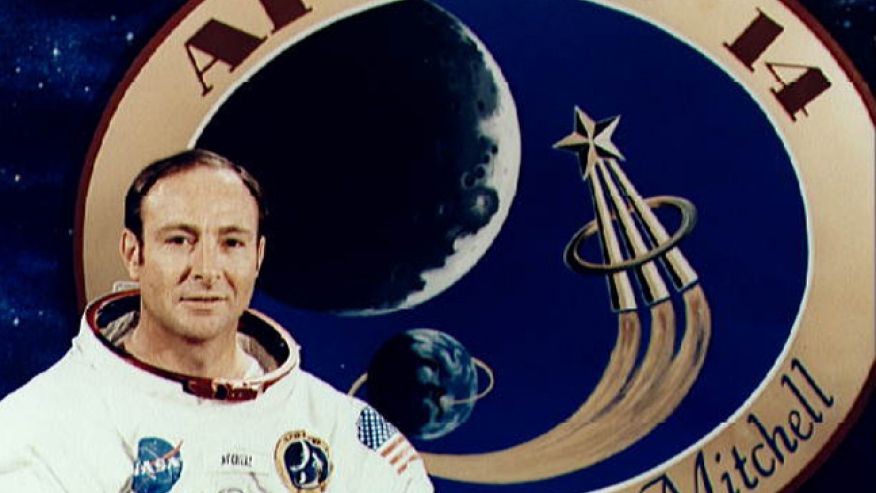
Apollo 14 astronaut claims peace-loving aliens prevented 'nuclear war' on Earth


From “The Day the Earth Stood Still” to “Close Encounters of the Third Kind” to “E.T.,” pop culture is filled with stories about friendly, curious extraterrestrials visiting Earth to learn more about mankind. For Apollo 14 veteran Edgar Mitchell that plotline is less fiction than it is reality. The sixth man to walk the surface of the moon told Mirror online that he believes peace-keeping aliens visited our planet to prevent a nuclear war between Russia and the United States.
The idea sounds far-fetched, but Mitchell claims that military insiders viewed strange flying crafts cruising over U.S. missile bases and the White Sands facility in New Mexico, the site of the first-ever nuclear bomb detonation in 1945.
“They wanted to know about our military capabilities,” he said. “My own experience talking to people has made it clear the ETs had been attempting to keep us from going to war and help create peace on Earth.”
Mitchell, who grew up near the famous Roswell site in New Mexico, said that he has heard from various Air Force officers who claim UFOs were a regular site during the Cold War.
“They told me UFOs were frequently seen overhead and often disabled their missiles,” he added. “Other officers from bases on the Pacific coast told me their (test) missiles were frequently shot down by alien spacecraft.”
Some are understandably skeptical about this theory that diplomatic aliens have traveled the cosmos to disarm U.S. military weapons.
“Given that the Universe is around 14 billion years old, if we’re being visited, it’s unlikely we’re dealing with a civilization just a few hundred years ahead of us, so stories of aliens managing to disrupt a few of our weapons tests are far-fetched,” Nick Pope, former Ministry of Defense UFO researcher, told Mirror online. “Chances are they’d be millions of years ahead of us and could do anything they wanted to.”
Read More >>

Media Blackout as France and Russia Both Announce Monsanto GMO Bans


When two of the most modernized and economically powerful countries in the world decide to ban a type of food crop that has made its way into roughly 70-80% or more of the U.S. food supply, you’d think it would be considered newsworthy.

But the United States media has missed the boat yet again on major happenings relating to GMO crops overseas.

Both Russia and France officially announced bans on Monsanto’s genetically engineered crops this past week, cementing their positions and upholding the will of the people in nations where public opinion is dead set on keeping the food and farming system natural.

“As far as genetically-modified organisms are concerned, we have made decision not to use any GMO in food productions,” Russia’s Deputy PM Arkady Dvorkovich announced at worldwide conference on biotechnology in the Russian city of Kirov according to the website RT.

“This is not a simple issue, we must do very thorough work on division on these spheres and form a legal base on this foundation,” he said. Russia has announced similar plans in the past but the announcement feels even more official considering the wave of GMO bans sweeping Europe these days.

France Plans to “Opt-Out,” Stay GMO Free

Meanwhile France also announced its plans to stay GMO Free by opting exercising its “opt-out” clause through the European Union.

In total, five nations in Europe have announced plans to ban the growth of Monsanto’s GMOs within their borders including Germany, Scotland, Latvia, and Greece.

The crops are allowed to be grown within the European Union but each country has its own ability to opt-out.

As noted in this article from Eco Watch, France’s main concerns stem from the environmental risks created by the crops, which are capable of contaminating non-GMO crops via wind pollination and causing other harm, especially when used with the herbicide, glyphosate, they are designed to withstand.

Monsanto’s MON810 genetically engineered corn, the only crop of its kind allowed in Europe, is a specific threat to natural agriculture in the country because of this concern.

American Media Silent on GMO Bans

A quick Google News search turns up virtually no results for the bans by Russia and France, aside from a few scattered alternative news sites.

With more Americans than ever before learning about GMOs and making their own decisions on whether to include such foods in their diet, and a huge vote looming in the Senate over a possible ban on mandatory GMO labeling in America (click here to learn more and take action), you’d think the news giants like NBC, Fox News, CNN and others would be chomping at the bit to get this news out to their readers and viewers.

But alas, they have chosen not to cover these stories, once again giving the American people an incomplete picture about the ongoing food experiment that they never consented to in the first place.

Nick Meyer writes for March Against Monsanto and the website AltHealthWorks.com.

Read More >>

Share

Twitter Delicious Facebook Digg Stumbleupon Favorites More