Showing posts with label Weather. Show all posts

Tropical Storm Joaquin Strengthens East of Bahamas; East Coast Landfall Potential Still Very Uncertain


Tropical Storm Joaquin underwent a period of noticeable strengthening Tuesday afternoon over the western Atlantic Ocean, and it appears likely to become a hurricane just east of the Bahamas before a complicated atmospheric pattern makes its future track – including any potential landfall on the U.S. East Coast – extremely difficult to forecast.

Residents along the East Coast of the U.S. should pay close attention to the forecast now through this weekend. It's a particularly difficult forecast that hinges on the behavior of several different atmospheric features over North America and the North Atlantic Ocean.

Computer forecast models (see graphic below) – and the meteorologists who rely on them for guidance – are grappling with a complex interaction between Joaquin, a cold front near the East Coast, the remnants of Tropical Storm Ida, a strong bubble of high pressure aloft over the North Atlantic Ocean, and a potentially strong area of low pressure aloft digging into the southeastern U.S. later this week.

(MORE: Expert Analysis | Hurricane Central)

Joaquin's future depends critically on the position and relative strength of those players – not to mention its own strength. Strong wind shear had kept most of Joaquin's thunderstorm activity (convection) south of its center of circulation, but that changed Tuesday afternoon as thunderstorms developed over the circulation center.

Air Force reconnaissance aircraft flew into the storm as that happened. The crew reported a central barometric pressure of 990 millibars – considerably lower than most forecast models had expected this early in Joaquin's evolution – signaling a robust tropical cyclone gaining strength. (Lower central pressure generally corresponds to higher wind speeds in tropical cyclones.)

Regardless of the ultimate outcome of Joaquin's path, portions of the East Coast will still see multiple impacts from the evolving large-scale weather pattern, including flooding rainfall, gusty winds, high surf, beach erosion and some coastal flooding. Click the link below for more information on that story.


In addition, Joaquin could move far enough southwest to bring rain and wind impacts to the northeast Bahamas during the latter half of the week. Interests there should follow the progess of Joaquin very closely.

Here's what we know about Joaquin:

Tropical Storm Joaquin's center is located about 405 miles east of the northwestern Bahamas as of 5 p.m. EDT Tuesday.

Maximum sustained winds jumped to 65 mph Tuesday afternoon.
As wind shear over the storm lessens, Joaquin should strengthen further and may become a hurricane Tuesday night or Wednesday.

This system is moving slowly to the west-southwest and this is expected to continue over the next day or so, before turning north Friday into Saturday.

Watches or warnings may be issued Tuesday evening for parts of the Bahamas, which could see rain and wind impacts from Joaquin depending on how far southwest the storm moves.

While the official National Hurricane Center five-day forecast track no longer includes the U.S. East Coast, Joaquin may directly or indirectly affect the East Coast late this weekend or early next week, and a landfall cannot be ruled out beyond the five-day forecast window.

Moisture and/or energy associated with Joaquin could enhance rainfall along the cold front in the Northeast late this week. Regardless, the East Coast will see significant impacts from the larger scale weather pattern taking shape.

Tropical Depression Eleven strengthened into Tropical Storm Joaquin Monday night after forming Sunday evening.

Read More >>

Nearly 20 Million People Were Displaced Last Year Because of Extreme Weather


Extreme natural disasters like floods, storms and earthquakes displaced nearly 20 million people in 2014, a new report by the Norwegian Refugee Council (NRC) has found.

Since 2008, an average of 26 million people have been forced to flee their homes every year, due to disasters brought on by natural hazards. That's equivalent to one person being displaced every second, the report said.

However, Mother Nature isn't the only factor to be blamed for the severity of the crisis. Often, the weather or earthquake isn't dangerous in and of itself, but when coupled with poor housing and or infrastructure in densely populated areas, can cause immense damage to life and property.

"A flood is not in itself a disaster, the catastrophic consequences happen when people are neither prepared nor protected when it hits," Jan Egeland, Secretary General of NRC, said in a statement. The NRC is an independent foundation focusing on protecting the rights of refugees and internally displaced people through aid distribution and advocacy.

People around the world are now sixty percent more likely to be displaced by a natural disaster than four decades ago. The reasons vary, but the authors said rapid urbanization and population growth in hazard-prone areas were the key drivers behind increased vulnerability

"The urban population in developing countries has increased by 326 percent since 1970," lead author Michelle Yonetani wrote in the report. "This rapid growth has for the most part been unplanned and poorly governed, leading to high exposure and vulnerability."

Yonetani and her co-authors compiled data from a wide range of sources, including governments, the United Nations, nonprofit organizations, and media reports.

Weather-related disasters, floods in particular, had the largest impact — displacing 17.5 million last year, while geophysical hazards such as earthquakes made 1.7 million people homeless.

According to the Intergovernmental Panel on Climate Change (IPCC), increasing levels of greenhouse gases in the atmosphere will lead to higher global temperatures, raising the risk of more intense droughts and storms, including tropical cyclones with higher wind speeds, a wetter Asian monsoon, and, possibly, more violent mid-latitude storms.

The NRC report says 1998 was the peak year for displacement — a year that coincides with the strongest recorded El Niño — a warming of the central and eastern tropical Pacific Ocean.

El Niños formations are a natural phenomenon that usually occur every two to seven years and can drastically change weather patterns across the globe. El Niño conditions currently exist in the Pacific and many scientists project this year's could be one of the strongest ever. It has already been identified as a major contributing factor in the recent wildfires stretching from California to Alaska and the heavy rainfalls in California.

Kristie Ebi, a professor at University of Washington's global health department, studies the impacts climate change, including extreme events, and how nations might better prepare for them.

"There has been big shift over the last few years in disaster risk management and adaptation to climate change; they have been running along parallel tracks," Ebi told VICE News. "We are now looking at how climate change is affecting how many disasters there could be and how intense they could be."

Related: 'Seek Higher Ground Immediately': Sifting Through the Wreckage of Texas' Deadly Floods

The IPCC in its 2001 report had stated that global warming could cause sea levels to rise 0.11 to 0.77 meters (0.36 to 2.5 feet) by 2100. This alone can lead to massive flooding and can submerge entire coastal cities. Many coastal towns and cities have their hospitals and other disaster relief infrastructure situated near the coast, Ebi said. "In many Pacific islands, the hospitals are in coastal region… If you look at long term projections for sea levels rise and much larger storm surges, you need to move those structures."

The NRC concurs with Ebi that smart infrastructure investment is crucial. The authors found that in Chile, which had one of the largest displacements of 2014, owing to an 8.2 magnitude offshore earthquake, investing in disaster prevention and preparedness paid off brilliantly. Around 970,000 people had to flee low-lying coastal areas in response to a tsunami warning following the tremor, but most were able to return home the following day.

Asia is home to 60 per cent of the world's population, but accounted for 87 percent of the world's displaced people in 2014. China, India, and the Philippines experienced the highest levels of displacement in absolute terms, both in 2014 and for the period from 2008-2014.

At the same time, Europe experienced double its average level of displacement for the past seven years, with 190,000 people displaced, mostly due to the flooding in the Balkans.

The link between extreme weather events and climate change also has some unforeseen consequences. Daniel Chapman, a graduate student at University of Massachusetts Amherst's

Psychological and Brain Sciences Department, has found that linking the two when making appeals for humanitarian relief can make some people, particularly climate change skeptics, view a disaster event and its victims unfavorably.

"While it is true that there is increasing scientific research on the link between disaster trends and climatic changes, in the aftermath of any single disaster it is difficult, if not impossible, to make this connection reliably."


Therefore, he added, "if the purpose of a group's message is to increase humanitarian relief, connecting a disaster with climate change may not be a good option."

Read More >>

Tropical storm system Juaqun could bring torrential rain flood to NY, NJ and CT


 NEW YORK – A strong onshore flow and an approaching cold front will bring the return of showers across the region for the next few days. On top of this, a tropical system which could become Joaquin by Monday night, and will drift northwest before getting caught with the cold front on Thursday.

The moist flow off the ocean could bring some drizzle and fog Monday night. Temperatures will be in the mid to upper 60s.

On Tuesday, the morning fog will eventually burn off by midday. The cold front will start to make its way east reaching the Appalachians by the afternoon. That could bring a few scattered showers late in the day. Ahead of the front, expect it to be warm and humid with highs at around the 80-degree mark.
Eventually the front approaches and rain will become steady Tuesday night into Wednesday. The front will be enhanced by deep tropical moisture so the rain will be heavy at times dumping anywhere from 1-3”. Rainfall rates are also expected to be high at times, so flash flooding will be a concern across the region.

Further down the road, we are watching a tropical system in the Atlantic Ocean. Tropical Depression 11 formed late on Sunday and is expected to become Tropical Storm Joaquin by Monday night. Current forecasts show the storm drifting northwest maintaining status as a tropical storm through Thursday.

The cold front that will pass through our region on Wednesday will “catch” the storm and drive it quickly up north on Friday as an “extratropical” low.  That is just a fancy name stating that the storm loses its tropical characteristics. Regardless of this fact, this storm could bring another round of drenching rains from late Friday into part of the weekend.


There is a lot of uncertainty this far out on what this storm will do to our area. We do not know the extent of the rain across the region. On top of that, coastal and river flooding will be questionable.  The exact details will have to be worked out for the next few days. We’ll keep you up to date as we get closer.

Read More >>

Icy blast hits South as winter spreads its reach


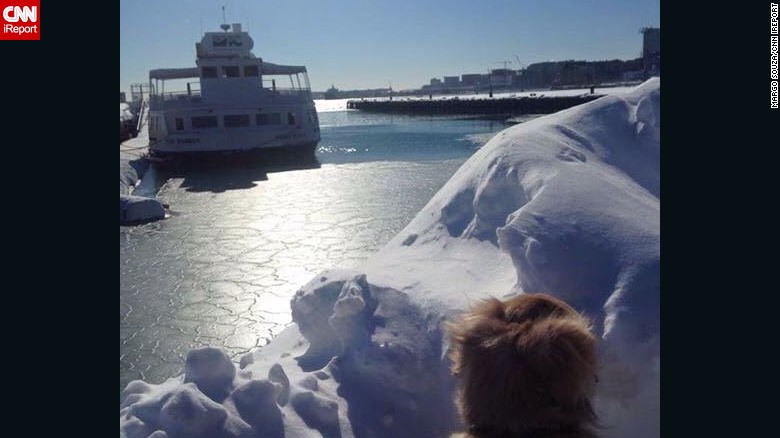
Margo Souza and her pup, Logan, overlooked the Boston Harbor Monday morning. The snow is taller than Logan and the top layer of the bay is frozen.  Salt trucks rumbled and traffic jammed as a massive new storm brought snow, freezing rain, ice and frigid temperatures to a large swath of the United States on Monday.


"It's dangerously cold," Washington Mayor Muriel Bowser told CNN's "The Situation Room," warning that the nation's capital was bracing for up to 8 inches of snow. And federal government offices in the area will be closed on Tuesday.

But the snow isn't the only thing to worry about.

"We are going to see high snowfall amounts, but the ice is what is going to be the big story," CNN meteorologist Jennifer Gray said, pointing at North Carolina.

Raleigh, North Carolina, could see up to a half-inch of ice, which could knock out power and "makes travel nearly impossible," she said.

The bitter cold is coming from several fronts. This weekend, the Northeast weathered its fourth snowstorm in three weeks, and extremely low temperatures are predicted to hang around for two more weeks.

A winter storm stretching across the Midwest and Southeast is bringing freezing rain and ice accumulation, especially from Arkansas to Tennessee.

Late Monday, Tennessee declared a state of emergency as road conditions quickly deteriorated and power outages spiked.

Temperatures across the eastern half of the United States will be below average for the entire week, and that's a big deal as winter fatigue sets in.

In Boston, where 95 inches of snow have already been recorded this year, the latest storm was expected to skirt by and bring a few more inches, Gray said.

This February is the city's snowiest month ever.
Frank Ippolito, the owner of a snow removal business operating in Boston, said his staff was weary from lack of sleep.

At this point, his snowplow drivers are putting snow "anywhere and everywhere there's an open piece of land that won't obstruct the view safely of the driver or prevent someone from getting out of a doorway or moving a car," he said.

Boston Mayor Marty Walsh said one man died after suffering a heart attack while shoveling snow.
"Please stay close to your home today -- shovel in short stints," he said.

Mounting "snow rage" is pitting drivers and neighbors against each other as the winter weather shows no sign of letting up, CNN affiliate WFXT reported.

"We've been noticing a little frustration out there on the roads," Massachusetts State Police trooper Kathryn Downey said. "I think people are getting pushed to their limits."

Margo Souza of Charlestown, Massachusetts, told CNN's iReport she was trying to take the snow in stride, even though it has doubled her commute. Her golden retrievers, Logan and Copley, love to bound around in it.


Still, she said she was hoping her city's baseball team might bring something with them when they head south for spring training.

"Send the snow to Florida," she said, "along with the Red Sox equipment."
One New York resident, Max Guliani, posted photos on Twitter of the frozen fountain at Bryant Park in New York City.

A pipe burst at the city's iconic Empire State Building, forcing one of its observatories to shut down, a spokeswoman said.

In Ithaca, in upstate New York, temperatures have gotten so cold that even the city's tourism website is telling people to head to the Sunshine State.

"That's it. We surrender," the website says. "Winter, you win. Key West anyone?"


Read More >>

The Department of Defense Must Plan for the National Security Implications of Climate Change


The responsibility of the Department of Defense is the security of our country. That requires thinking ahead and planning for a wide range of contingencies.

Among the future trends that will impact our national security is climate change. Rising global temperatures, changing precipitation patterns, climbing sea levels, and more extreme weather events will intensify the challenges of global instability, hunger, poverty, and conflict. They will likely lead to food and water shortages, pandemic disease, disputes over refugees and resources, and destruction by natural disasters in regions across the globe.

In our defense strategy, we refer to climate change as a “threat multiplier” because it has the potential to exacerbate many of the challenges we are dealing with today – from infectious disease to terrorism. We are already beginning to see some of these impacts.

A changing climate will have real impacts on our military and the way it executes its missions. The military could be called upon more often to support civil authorities, and provide humanitarian assistance and disaster relief in the face of more frequent and more intense natural disasters. Our coastal installations are vulnerable to rising sea levels and increased flooding, while droughts, wildfires, and more extreme temperatures could threaten many of our training activities. Our supply chains could be impacted, and we will need to ensure our critical equipment works under more extreme weather conditions. Weather has always affected military operations, and as the climate changes, the way we execute operations may be altered or constrained.

While scientists are converging toward consensus on future climate projections, uncertainty remains. But this cannot be an excuse for delaying action. Every day, our military deals with global uncertainty. Our planners know that, as military strategist Carl von Clausewitz wrote, “all action must, to a certain extent, be planned in a mere twilight.”

It is in this context that today I am releasing DoD’s Climate Change Adaptation Roadmap. Climate change is a long-term trend, but with wise planning and risk mitigation now, we can reduce adverse impacts downrange.

Our first step in planning for these challenges is to identify the effects of climate change on the Department with tangible and specific metrics, using the best available science. We are almost done with a baseline survey to assess the vulnerability of our military’s more than 7,000 bases, installations, and other facilities. In places like the Hampton Roads region in Virginia, which houses the largest concentration of U.S. military sites in the world, we see recurrent flooding today, and we are beginning work to address a projected sea-level rise of 1.5 feet over the next 20 to 50 years.

Drawing on these assessments, we are integrating climate change considerations into our plans, operations, and training across the Department so that we can manage associated risks. We are considering the impacts of climate change in our war games and defense planning scenarios, and are working with our Combatant Commands to address impacts in their areas of responsibility.

At home, we are studying the implications of increased demand for our National Guard in the aftermath of extreme weather events. We are also assessing impacts on our global operations – for instance, how climate change may factor into our rebalance to the Asia-Pacific. Last year, I released the Department of Defense’s Arctic Strategy, which addresses the potential security implications of increased human activity in the Arctic – a consequence of rapidly melting sea ice.

We are also collaborating with relevant partners on climate change challenges. Domestically, this means working across our federal and local agencies and institutions to develop a comprehensive, whole-of-government approach to a challenge that reaches across traditional portfolios and jurisdictions. Within the U.S. government, DoD stands ready to support other agencies that will take the lead in preparing for these challenges – such as the State Department, the U.S. Agency for International Development, and the Federal Emergency Management Agency.

We must also work with other nations to share tools for assessing and managing climate change impacts, and help build their capacity to respond. Climate change is a global problem. Its impacts do not respect national borders. No nation can deal with it alone. Today, I am meeting in Peru with Western Hemisphere defense ministers to discuss how we can work together to build joint capabilities to deal with these emerging threats.
Politics or ideology must not get in the way of sound planning. Our armed forces must prepare for a future with a wide spectrum of possible threats, weighing risks and probabilities to ensure that we will continue to keep our country secure. By taking a proactive, flexible approach to assessment, analysis, and adaptation, the Defense Department will keep pace with a changing climate, minimize its impacts on our missions, and continue to protect our national security.

Chuck Hagel is the U.S. Secretary of Defense.

Read More >>

Blizzard warnings, travel bans, closures storm the East Coast


Travel bans, flight cancellations, power outages and school closures are being issued throughout the northeast coast. Here's a look at what's going on in each state:

NEW YORK

• Blizzard warning and coastal flood watch issued by the National Weather Service.
• No cars on the streets, outside of emergency vehicles, after 11 p.m. Monday, Gov. Andrew Cuomo said. Violation of this will count as a misdemeanor calling for a $300 fine, he said.
• Public transportation and commuter transportation out of Port Authority Bus Terminal shuts down at 11 p.m., Cuomo said.
• Free cab rides: Greater New York Taxi Association offered free cab service in NYC for emergency responders trying to get to work, and disabled and elderly residents who become stranded.
• Cuomo urged commuters to stay home Monday and warned that mass transit and roadways could be closed before the evening rush hour, even major highways such as the New York Thruway, Interstate 84 and the Long Island Expressway.
• All flights in and out of LaGuardia Airport on Tuesday are cancelled, Cuomo said. Flights in and out of John F. Kennedy Airport will be minimal, the governor said.
• Knicks vs. Kings: Monday night's New York Knicks game against the Sacramento Kings at Madison Square Garden is rescheduled for March 3.
• Nets vs. Trail Blazers: Brooklyn Nets' game against the Portland Trail Blazers at the Barclays Center is rescheduled for April 6.
Read More >>

Share

Twitter Delicious Facebook Digg Stumbleupon Favorites More